County Overview
Washington County covers 616 square miles of Florida's Panhandle, with a population of roughly 25,000 people. Jackson County borders it to the east, Holmes County to the north, Bay County to the south, and Walton County to the west. Interstate 10 crosses the county east to west, making it one of the more accessible rural counties in this part of the state.
This is not a tourism county or a bedroom community. Washington County's economy is built on agriculture, timber, and the small-town services that support them. The county seat, Chipley, is the only real commercial center. The rest of the county is rural in a way that parts of Florida have forgotten how to be — working land with peanut fields rotating into cotton, pine plantations growing toward harvest, and cattle grazing hay pasture along creek bottoms.
For land buyers, Washington County offers a combination that is increasingly difficult to find: affordable rural acreage with I-10 access, within an hour of the coast, in a county that hasn't been priced up by development pressure. The median price per acre is around $5,500 — a fraction of what comparable land costs in Bay County.
The Waterways
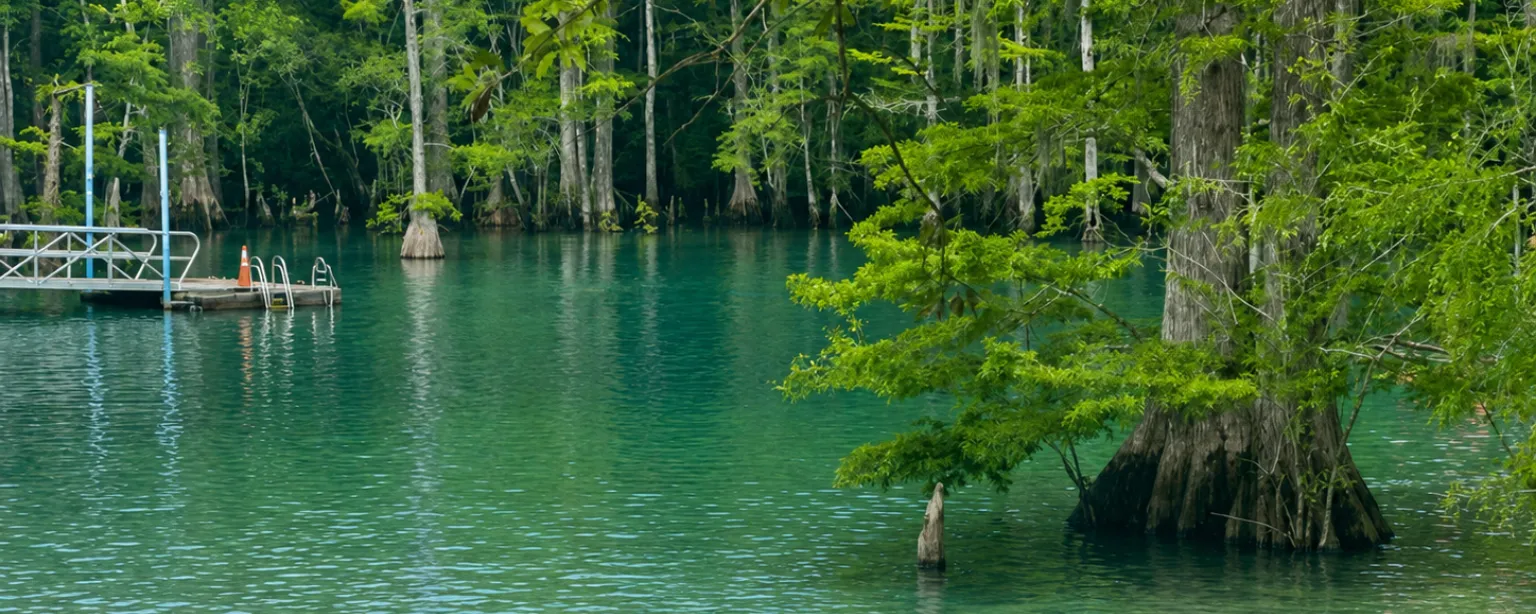
Water defines the eastern half of Washington County more than any other feature. Three creek systems shape the landscape, the land values, and what you can do with a given parcel.
Holmes Creek is the largest tributary to the Choctawhatchee River and the most significant waterway in the county for land buyers. Fifty-seven documented springs feed Holmes Creek, including Cypress Spring — a first-magnitude spring that draws swimmers, paddlers, and snorkelers year-round. The state has designated Holmes Creek as an official canoe trail and has purchased more than 347 acres along its banks for conservation.
Holmes Creek runs roughly north to south through the eastern part of the county, passing near Vernon before joining the Choctawhatchee. Land with Holmes Creek frontage carries a premium, and for good reason — the creek is spring-fed, clear, and scenic. But creek-front buyers need to check the FEMA Flood Map Service Center carefully. The floodplain extends well beyond the visible banks in many sections, and a parcel that looks high and dry in May can look very different in March.
The Choctawhatchee River forms part of the county's eastern boundary. It is a larger, slower waterway than Holmes Creek — a river rather than a creek — and its floodplain is wider. The Choctawhatchee River Wildlife Management Area spans more than 57,000 acres across Washington, Bay, Holmes, and Walton counties. For land buyers, the Choctawhatchee means public hunting access and river recreation, but also means paying close attention to flood zones and wetland boundaries on parcels near the river corridor.
Hard Labor Creek drains 2,336 acres of rolling pinelands and forested wetlands in the western part of the county. It's a smaller system than Holmes Creek but contributes to the county's overall character — a landscape shaped by water moving through sand and pine.
For land buyers, waterway proximity is a double-edged feature. Creek and river frontage adds recreational value, scenic appeal, and — for the right buyer — a premium that holds at resale. But it also means flood insurance costs, potential wetland restrictions on clearing and building, and the need for a careful survey before closing. Pull the flood zone determination, walk the property after a hard rain, and know what you're buying.
Agriculture
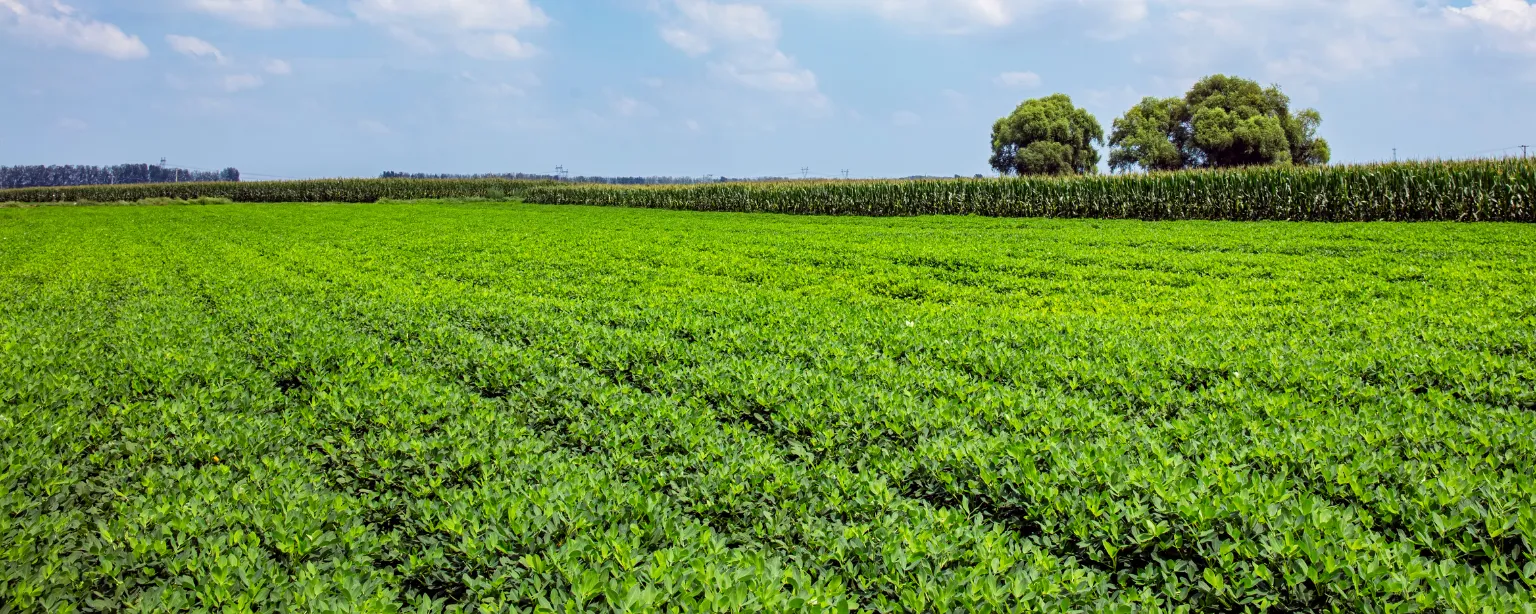
Washington County's agricultural economy runs on peanuts, cotton, hay, beef cattle, and poultry. The county's deep sandy soils and long growing season support row crop rotations — peanuts followed by cotton is the most common pattern — and the flat to gently rolling terrain lends itself to mechanized farming.
Beef cattle operations work the hay pasture and improved grasslands, particularly in the flatter areas south and west of Chipley. Broiler houses (poultry) are present throughout the county, with contract growing for processing companies being a significant part of the agricultural economy.
The Rural and Family Lands Protection Program (RFLPP) is active in Washington County, purchasing conservation easements on working agricultural land to keep it in production rather than allowing it to convert to residential or commercial use. For land buyers, RFLPP activity means that some of the county's best farmland is under easement and won't come to market. It also means that the farmland that IS available may be more valuable over time as protected acreage removes supply.
Buyers looking at agricultural parcels should check whether existing RFLPP or other conservation easements apply, understand the county's agricultural zoning classifications, and know that farm use qualifies for agricultural property tax exemptions that significantly reduce annual tax bills.
Timber
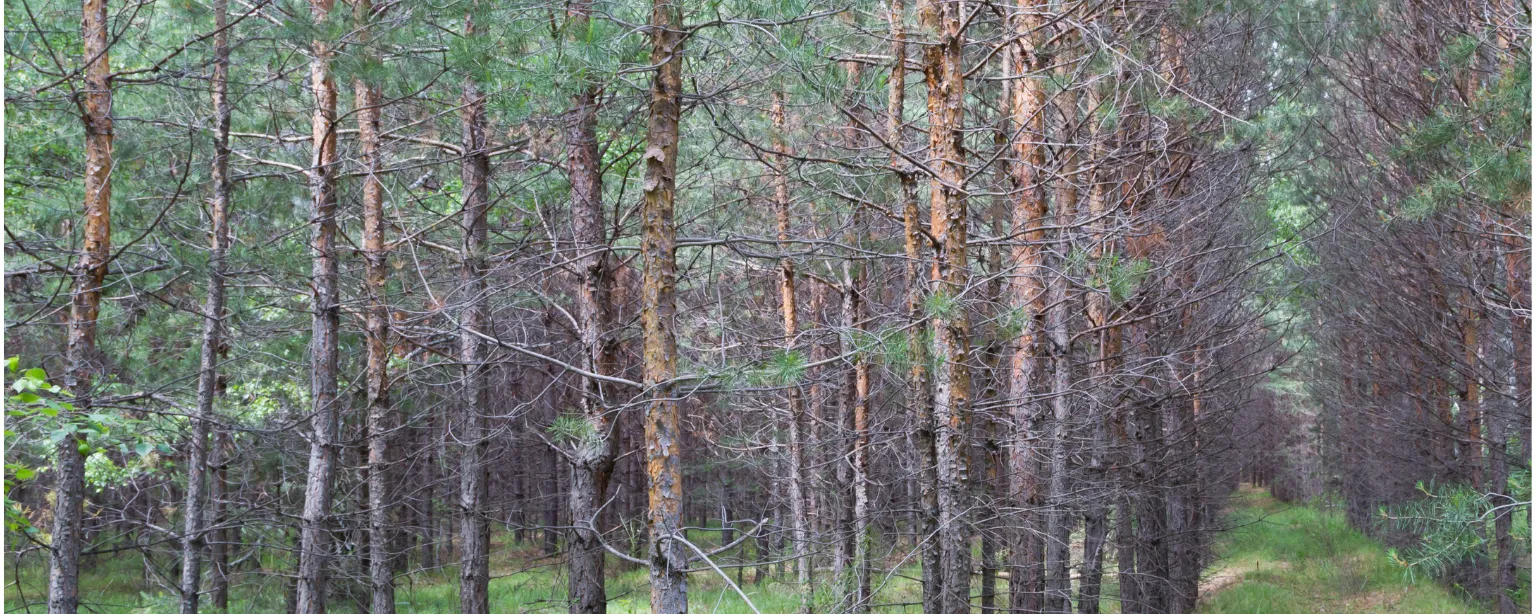
Timber is the other pillar of Washington County's land economy. Longleaf pine — once the dominant species across the entire southeastern coastal plain — is being actively restored throughout the county, supported by federal and state conservation programs. Loblolly pine plantations, which grow faster and are harvested on shorter rotations, cover large areas of the county's uplands.
For buyers considering timber land, the key variables are species mix, stand age, and harvest timeline. A mature loblolly stand approaching harvest age (typically 25–30 years for saw timber) has immediate income potential. A recently planted longleaf stand is a long-term investment — longleaf grows more slowly but produces higher-value timber and qualifies for conservation program payments during the growth period.
Timber rights are separate from land rights in Florida. A parcel may be sold with or without standing timber, and existing timber leases or harvest contracts may convey to the new owner. Before buying timber land, get a timber cruise (professional inventory of standing timber volume and value), confirm who holds the timber rights, and review any existing harvest contracts.
Conservation Reserve Program (CRP) enrollment is another consideration. Some Washington County timber parcels are enrolled in CRP, which provides annual rental payments in exchange for keeping the land in conservation use. CRP contracts have fixed terms, and buyers should understand the remaining obligation and what happens at contract expiration.
Hunting and Recreation
Washington County is legitimate hunting country. The Choctawhatchee River Wildlife Management Area provides more than 57,000 acres of public hunting access across multiple counties, with significant acreage in Washington County. The WMA supports whitetail deer, wild turkey, feral hog, and small game, with managed hunt seasons set by the Florida Fish and Wildlife Conservation Commission.
Private hunting land in Washington County averages around $6,213 per acre. The terrain — pine flatwoods transitioning to hardwood creek bottoms — creates the edge habitat that concentrates game. Tracts along Holmes Creek and its tributaries are particularly productive for deer and turkey, with the creek corridors providing travel lanes and the pine uplands providing food and cover.
Beyond hunting, Holmes Creek and Cypress Spring are the county's primary recreation draws. Cypress Spring is a first-magnitude spring with clear water and a sandy bottom — a popular spot for swimming, kayaking, and snorkeling. The Holmes Creek canoe trail offers a multi-mile paddling route through some of the most scenic creek landscape in the Panhandle. The county fairgrounds near Chipley host livestock events, rodeos, and community gatherings year-round.
Where in the County
Chipley is the county seat and services hub, sitting at the I-10 and US-90 intersection. Land near Chipley carries the county's highest per-acre pricing ($18,390 average) but offers proximity to the hospital, schools, shopping, and the interstate. Best for buyers who need regular access to services.
Vernon is in the eastern part of the county, along Holmes Creek. Lower per-acre pricing ($8,000–$10,000 average), larger available tracts, and terrain suited to hunting, timber, and recreational use. Best for buyers who prioritize acreage and natural features over town access.
Sunny Hills is a large platted community in the southern part of the county — nearly 28 square miles, with a championship golf course and thousands of available lots. The lot market has complexities that buyers should understand; see the Sunny Hills page for details.
Wausau is a tiny incorporated town on SR-77, fifteen minutes south of Chipley. Known as the Possum Capital of the World for its annual festival. Affordable rural land along the SR-77 corridor.
Ebro is in the southwestern corner of the county on SR-79, about 15 minutes from Panama City. The closest Washington County community to the coast, home to the Ebro Greyhound Park.
Caryville is a historic sawmill town on the Choctawhatchee River in northern Washington County. Some of the county's most affordable land, with flood zone awareness essential near the river.
Greenhead sits on SR-77 between Chipley and Panama City, roughly equidistant from both. Home to the deed-restricted Grassy Pond Community.
New Hope is one of the county's oldest settlements (founded ~1822), along SR-79 and the Choctawhatchee River. About 3,400 residents with a quiet, rural atmosphere.
Pricing
Washington County's land market operates on a wide pricing spectrum. The county-wide numbers tell part of the story:
| Metric | Value |
|---|---|
| Median price per acre | ~$5,500 |
| Average listing price | $117,292–$118,792 |
| Average price per acre | $13,668 |
| Average days on market | 224 days |
| Hunting land average | $6,213 per acre |
But the county-wide averages mask real variation. Land near Chipley averages $18,390 per acre — more than three times the county median — because of proximity to services and infrastructure. Large timber tracts pull the per-acre median down because they sell in bulk at lower per-acre rates. A ten-acre homesite near town and a two-hundred-acre timber tract in the eastern county are in completely different markets that happen to share a county line.
The 224-day average marketing time tells you that this is not a fast-moving market. Land in Washington County sells when the right buyer finds the right parcel — and that takes time. Buyers should not feel pressured to rush, and sellers should plan for a longer marketing period than residential real estate.
Compared to Neighboring Counties
Jackson County (east) is more developed, with more small towns (Marianna, Sneads, Graceville, Cottondale), a larger population, and attractions like Florida Caverns State Park and the Chipola River. Land prices are comparable in rural areas but higher near Marianna. Jackson County has more inventory and more active buyers. For buyers comparing the two, Jackson offers more town options and a slightly more established land market; Washington offers more affordability and more solitude. Browse Jackson County land ›
Holmes County (north) is smaller and more rural than Washington County, with lower land prices and fewer services. Bonifay is the county seat. Buyers looking for the most affordable acreage in the tri-county area often look here, but should plan for longer drives to hospitals, shopping, and I-10.
Bay County (south) is a different world — Panama City, Panama City Beach, Tyndall Air Force Base, and coastal tourism drive dramatically higher land prices. Buyers who want to be near the coast but cannot afford Bay County prices often look to Washington County as an alternative, particularly in Sunny Hills (about 45 minutes to PCB).
Local Offices
For contact information on the county offices a purchase actually routes through — the Property Appraiser, Clerk of Court, Planning Department, and Extension office — see Local Offices & Agencies.
Common Questions
What is the average price per acre in Washington County FL?
The county-wide median is around $5,500 per acre. This varies significantly by location: land near Chipley averages $18,390 per acre, while rural tracts in the Vernon area average $8,000–$10,000. Large timber tracts sell at lower per-acre rates and pull the median down.
What crops are grown in Washington County FL?
Peanuts, cotton, hay, beef cattle, and poultry (broiler houses) are the primary agricultural products. Peanut and cotton rotations are the most common row crop pattern. The Rural and Family Lands Protection Program actively preserves farmland in the county.
Is there public hunting land in Washington County?
Yes. The Choctawhatchee River Wildlife Management Area covers more than 57,000 acres across several counties, with significant acreage and public hunting access in Washington County. Whitetail deer, wild turkey, feral hog, and small game are available through managed hunt seasons.
What is Holmes Creek?
Holmes Creek is the largest tributary to the Choctawhatchee River, running through eastern Washington County. It is fed by fifty-seven documented springs, including Cypress Spring, and is designated as a state canoe trail. The Florida DEP has purchased more than 347 acres along the creek for conservation.
How far is Washington County from the coast?
Sunny Hills is approximately 45 minutes from Panama City Beach. Chipley is about an hour from the coast. The southern border of Washington County is roughly 30 miles from the Gulf.
What towns are in Washington County FL?
Chipley (county seat) and Vernon are the two main towns. Sunny Hills is a large platted community. Smaller communities include Ebro, Wausau, Caryville, and Greenhead.